

Paylaş


1. What led students to launch the boycott? What are their main demands?
The student protest comes as a continuation of the Flamingo Revolution, which has been ongoing for 137 days. Students are dissatisfied with the state of education, but their concerns extend beyond universities to broader problems with governance. They have not presented a list of specific demands; instead, they are expressing a broader rejection of the government and calling for its resignation, echoing demands that have been voiced for months by the ongoing movement.
2. How widespread is participation in the boycott? Which universities and faculties are involved, and how are students organizing?
Students from several faculties and universities have joined the boycott, including Medicine, Philology, the Polytechnic University and the University of Sports. The boycott has become part of the broader Flamingo Revolution. Students are mobilizing around shared dissatisfaction with the education system and the wider political situation, taking their protest directly to the Ministry of Education and demanding political change.
3. What issue comes up most often in your conversations with students on the ground? Was there a particular personal account that struck you?
One of the most recurring concerns is the lack of a future for young people in Albania. Students speak about emigration as one of the country's biggest wounds, expressing the feeling that they cannot build a future for themselves here. Their frustration goes beyond education: they want to be able to live, work and see a future in their own country, rather than feeling compelled to leave.
4. How have university administrations and the government responded to the demands? Have any concrete talks with students begun?
Rather than addressing the substance of the students' grievances, the government has focused on questioning the identity and political affiliations of the protesters, claiming that they are not genuine students but Democratic Party representatives. This is a familiar response to protests in Albania, where the focus often shifts to alleged political affiliations instead of the demands being raised. The response so far has been characterized by political accusations rather than substantive engagement with the students' concerns.
5. Under what conditions do students say they would end the boycott? What actions are they planning for the coming days?
Students have issued Prime Minister Edi Rama an ultimatum, demanding his resignation by the following day. Their position is aligned with the broader Flamingo Revolution, which has called for the government's departure for months.
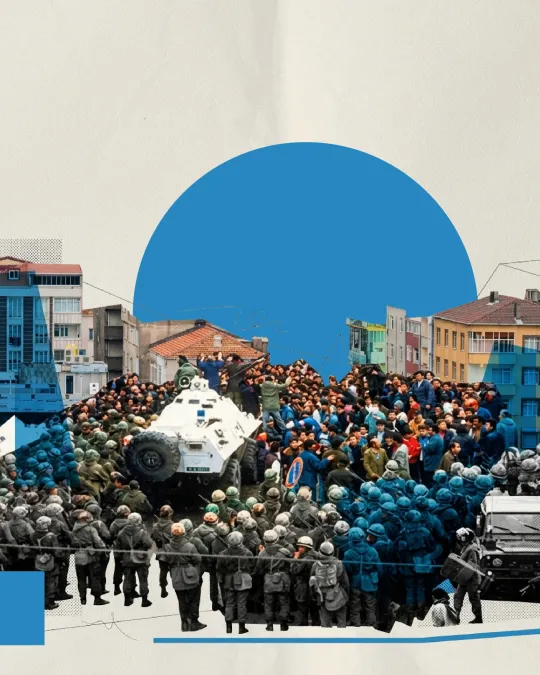
Today, the situation escalated dramatically, with unrest spreading across the city, fires reported at ministry buildings and confrontations with police. The situation appeared to move beyond the authorities' ability to contain it. The coming days will be crucial in determining whether the ultimatum leads to further escalation or a political response.
6. How are students in Albania responding to the student protests in France? What similarities and differences do you see between the two movements’ demands and organizing methods? Has there been any contact or solidarity between them?
Albanian students say they are inspired by the protests taking place across Europe, including in France. They see their movement as part of a wider wave of demonstrations, where confrontations and violence have become recurring features. Their message is that what is happening in Albania today is something that happens in Europe every month, and that Albania is now joining this broader wave of unrest rather than experiencing an isolated student protest.
Students see parallels in the frustration driving people to the streets and their willingness to challenge those in power.


0 Yorum